The following is our commentary on the report "The Future of Parking". Key findings from the report include:
- For many drivers, parking is an unavoidably high-friction experience — whether it involves circling the block, hunting for an elusive curbside opening, or rushing to vacate a coveted space.
- The parking experience could be the next aspect of modern life to be upended by new technologies and business models.
- Americans on average spend 17 hours per year searching for parking, resulting in a cost of US$345 per driver in wasted time, fuel, and emissions. In New York, drivers spend 107 hours and US$2,243 annually.
Our Perspective
At Spatium we believe strongly in our responsibility to solve societal problems by developing responsible technological solutions. We work to co-create cities that are sustainable, safe, and enjoyable for every citizen. We also believe that intelligent parking management can contribute positively to sustainable mobility strategies for cities around the world.
Mobility is a growing issue due to population growth in urban environments. Cities must therefore reorganize rapidly and develop or adapt their infrastructures and services in order to maintain and improve the quality of life of their citizens.
Most vehicles traveling in the city will use at least two parking spots per day. In addition, a motorist loses up to 20 additional minutes while searching for parking, which necessarily causes local braking events that weigh down the overall traffic. Parking is as much a productivity problem as an environmental issue. Parking owners and managers will have to adapt to the pressure of road users to maintain the level of satisfaction of the population.
The Cost of Poor Parking Information
Parking is an important cause of bad customer experience. The stress of a user decreases if they know in advance where to park or if they know they will receive the information on the way. This is why transit systems now offer next arrival times — and parking should be no different.
This lack of information creates unnecessary waste. Take the case of hotels in urban areas: stressed tourists who are tired and unfamiliar with the area go to the front desk asking for nearby parking. With the right information systems, this situation could easily be avoided and hotels could provide better service to their customers.
New Technologies for Better Parking
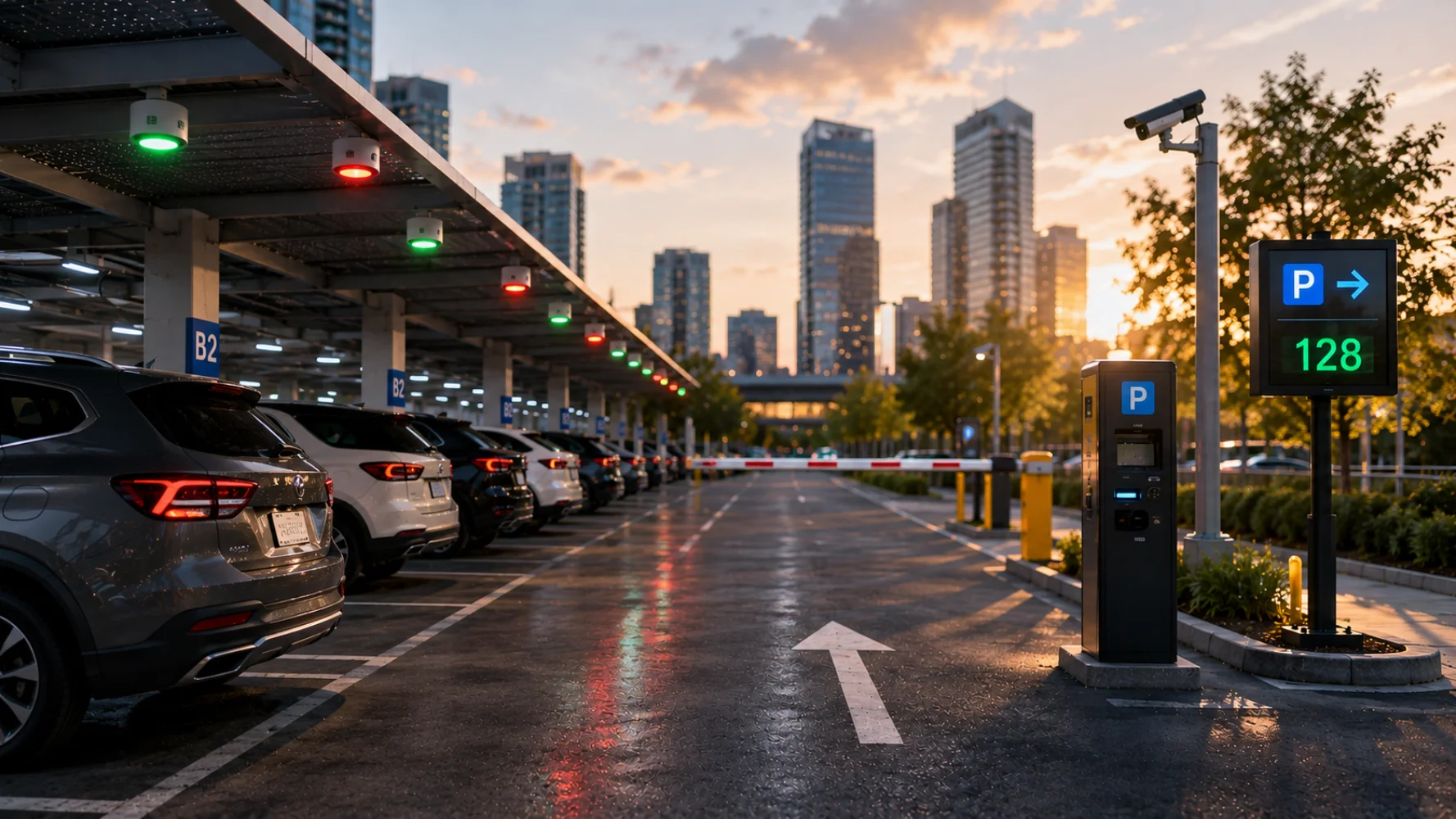
New detection technologies using Sonar and LiDAR sensors have major benefits. These sensors are installed on existing parking signs and are equipped with batteries and a solar panel for increased durability. Parking owners and managers can provide high-value real-time data to car users through mobile applications already in use by the population.
As a result, motorists will reduce their search time, which will reduce urban traffic and improve the customer experience. The manager, meanwhile, will be able to build a relevant database to develop business intelligence — adjusting parking rates according to real-time usage, improving customer experience through automatic booking or dynamic displays, planning maintenance periods, and simplifying different parking management practices.
In short, the manager will be able to improve their processes and make informed decisions based on precise data — and Spatium is here to make that possible.