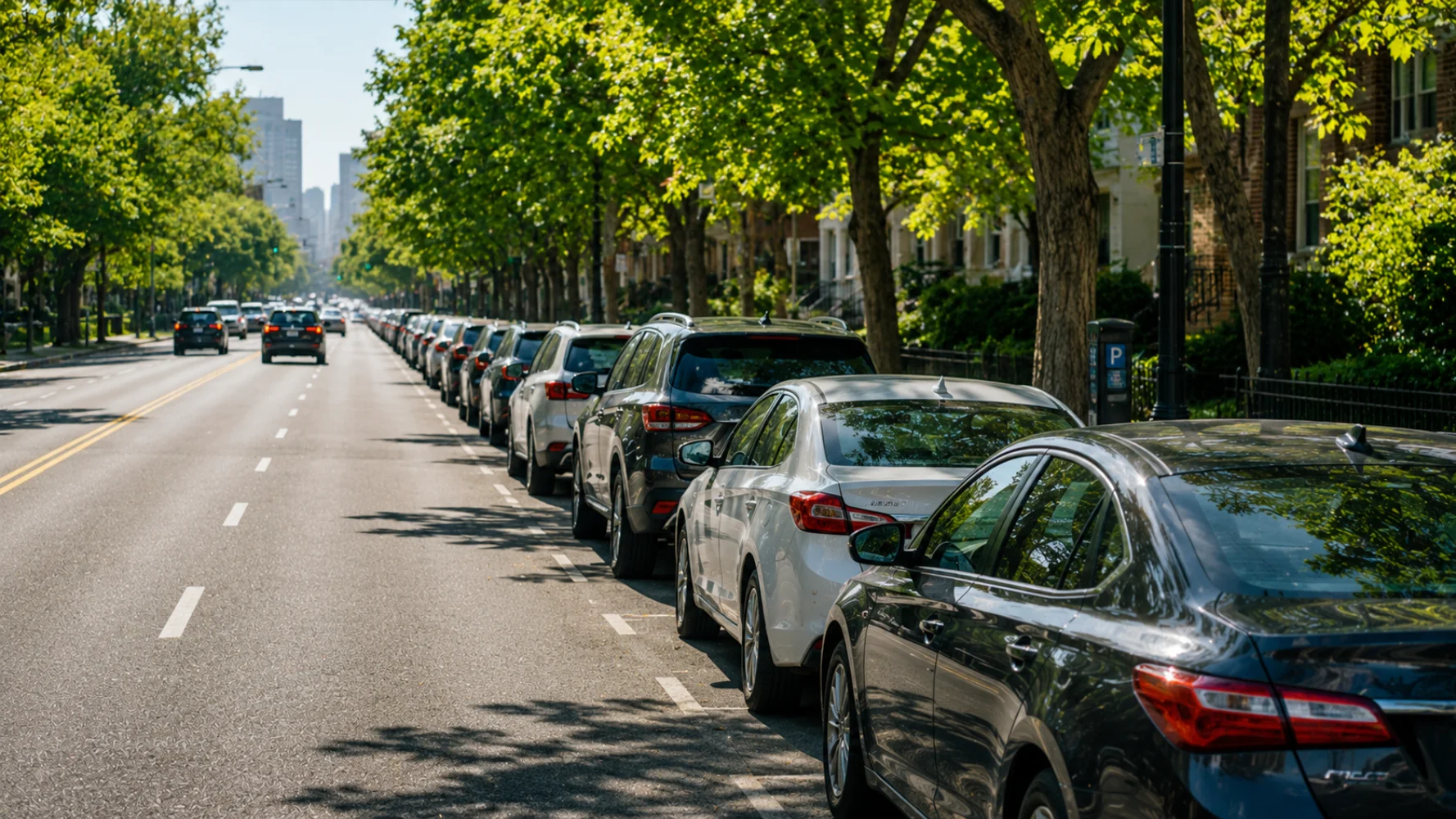
Cities often focus on the financial benefits of curbside parking management systems, skipping the most critical information: parking availability data.
Curbside parking is a vital aspect of urban mobility. Despite the emergence of smart parking solutions, city representatives often focus these technologies on financial benefits — such as issuing parking tickets. While this may generate quick revenue, it does not address the underlying problem of parking scarcity, and leads to a lack of attention on the information most needed to manage curbside parking effectively.
Creating New Revenue Streams Through Availability Information
Knowing the availability of parking spaces has the potential to generate far more revenue than issuing tickets alone. With dynamic pricing strategies, cities can adjust parking rates based on demand, ensuring that spaces are always available for those who need them while maximizing revenue.
Cities can also use real-time data to provide accurate information about available parking spaces through mobile applications or digital signs. This widely improves the curbside parking experience — citizens spend less time searching and more time enjoying city amenities.
The IPMI's Emerging Trends in Parking report notes: "Many of the technology improvements dovetail with the parking industry's drive to make parking more environmentally sustainable by reducing the time it takes to find parking, decreasing fuel consumption and fuel emissions."
Modernizing Curbside Parking Management
Implementing curbside management solutions comes with real challenges. Lack of power supply restricts sensor deployment in some locations. Urban infrastructure and vegetation can obstruct cameras. And ground-installed sensors risk damage from street works or snow removal.
Spatium addresses these challenges through flexible integration with a wide range of sensor types — including wireless, battery-powered detectors that can be integrated into urban furniture without disrupting streets, and without capturing any personal data.
Conclusion
While the financial benefits of curbside parking management are important, focusing solely on revenue generation leads to missed opportunities. By prioritizing street parking availability information, city representatives can reduce congestion, create new revenue streams, and use urban space more efficiently — all while delivering a better experience for citizens.